Good and Evil: Anything but Sanity
People end up serving a system that serves itself, not them. They lose clarity, curiosity, and critical thought. They are taught to replace investigation with belief, and to replace reason with faith.
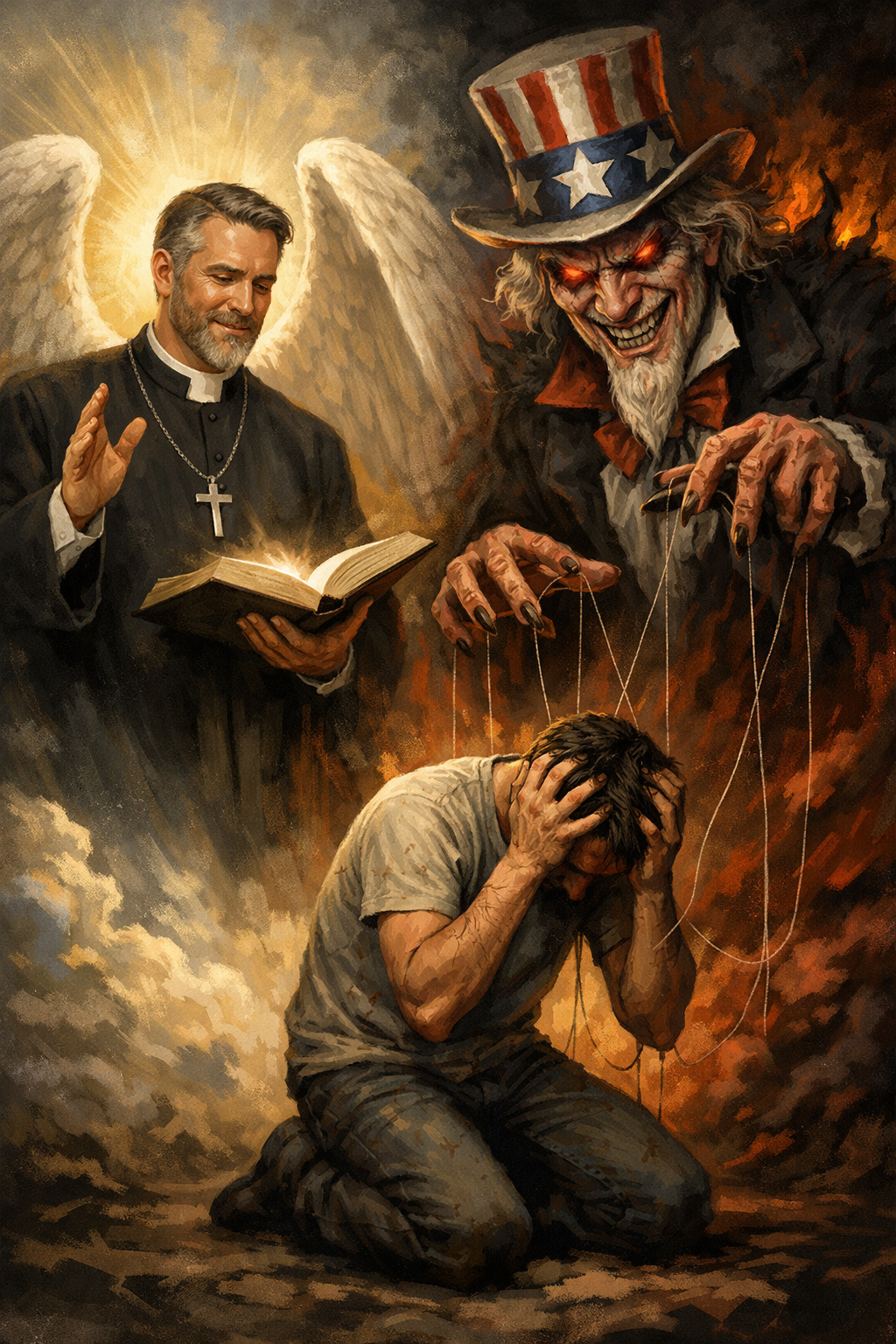
Does listening to or obeying people who are obvious liars make you a better person or a saner person. This is the uncomfortable question at the root of the relationship between government and religion in the United States. The relationship is not holy. It is not moral. It is a calculated exchange of power. The government functions as an engine of control. Churches present themselves as engines of goodness. Yet both depend on each other to maintain influence, money, and authority. What emerges from this alliance is not sanity or truth. What emerges is control.
The government grants churches enormous advantages. Churches avoid income tax, property tax, and often sales tax. Donors receive tax rewards that make giving financially attractive. Churches access tax exempt bonds that provide cheap financing. Cities assist with zoning. Regulations barely touch them. This is not spiritual generosity. It is political investment.
Governments support churches because churches create order. Churches shape communities, reinforce moral rules, and promote obedience. They produce predictable voting blocs that political leaders openly describe as loyalty. Politicians know that harming churches means losing influence, while protecting churches strengthens political alliances. Religious leaders promote behaviors that governments find useful. Governments shield the institutions that give them social stability. Both gain from the partnership even when neither speaks the truth.
What the government gains is control over large communities that follow moral structures aligned with political interests. Politicians gain voters, influence, cultural leverage, and a steady river of compliant minds shaped by weekly sermons that echo the values those politicians prefer.
What the churches gain is money, land, tax protection, legal advantages, and a socially elevated position that would disappear without government preference. Churches gain legitimacy and longevity by attaching themselves to political power. Their survival is strengthened by the state that claims to stay out of religion while quietly feeding it.
What the humans gain is something entirely different. They gain a type of psychosis. They learn to trust institutions that do not deserve their trust. They learn to treat ideas and stories as literal truth without evidence. They learn obedience to their religion, and their religion is obedient to its political puppet masters. People end up serving a system that serves itself, not them. They lose clarity, curiosity, and critical thought. They are taught to replace investigation with belief, and to replace reason with faith.
Faith contradicts critical thinking. Faith asks you to accept the unprovable as real. Critical thinking urges you to question everything and destroy weak ideas. Faith asks you to stop searching for truth. Critical thinking forces you to search until truth is undeniable. When a population is trained to choose faith over inquiry, it becomes easy for government and religion to shape minds in whatever direction benefits them.
Whether someone sees religion as good or bad does not change how this mechanism works. The structure is unified. Government gains stability and power. Religion gains money and protection. Humans gain obedience disguised as spirituality. Truth is not rewarded. Control is rewarded.
When a government built on manipulation empowers institutions built on unquestioning belief, the outcome is not enlightenment. It is psychological captivity wrapped in the language of morality and community.