Government, Religion, and You: The PSYOPS Explained
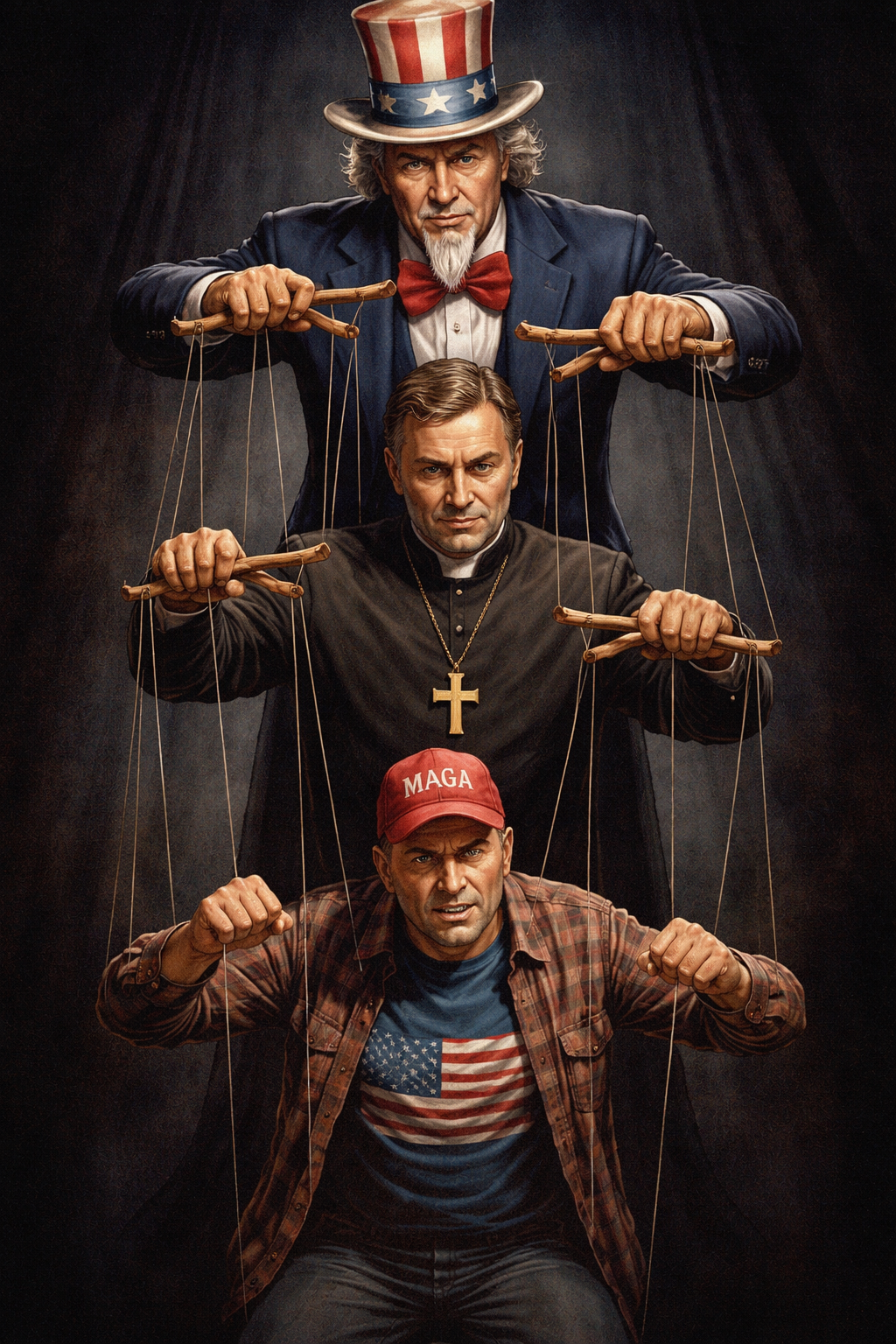
What if religion is not what we have been told it is? What if it is not divine truth revealed from beyond, but one of the most effective systems ever aligned with power to shape human behavior?
Start with the foundation. Across thousands of years, religious leaders and institutions have claimed to speak for God. They have declared laws, justified authority, and sanctioned war in His name. And yet, not once has any religion, leader, or institution produced empirical, testable proof that what they call “God’s will” can be verified. That matters. Because when something cannot be tested, it cannot be challenged in the same way. And when it cannot be challenged, it can be defined by those in power.
Now look at how governments treat religion. In the United States, religion is not simply tolerated. It is structurally supported. Churches receive automatic tax exemptions. Donations are tax deductible. Religious institutions often operate with fewer disclosure requirements than other organizations. At the same time, political leaders publicly invoke God, government proceedings open with prayer, and large segments of the electorate are organized around religious identity. For something that is supposed to be separate from government, it is consistently elevated, protected, and reinforced.
That raises a critical question. Why does government favor religion in ways it does not favor most other systems? Governments do not repeatedly invest in things that do not serve a function. So what function does religion serve?
Religion produces identity, loyalty, and moral certainty at scale. It does so through community, ritual, and shared meaning, creating bonds that feel authentic and durable. Once those bonds form, messages framed in moral or sacred language carry more weight, and authority aligned with that identity becomes easier to accept.
This is where the U.S. case becomes more direct. While the Constitution formally separates church and state, the people operating the system are overwhelmingly religious. Members of Congress identify as Christian or Jewish at rates far higher than the general population, while those who identify as non religious remain a small minority. That imbalance matters because personal identity influences priorities, messaging, and what arguments resonate politically.
Beyond elected officials, organized advocacy networks play a significant role. Religious political action committees, faith based organizations, and aligned donor networks mobilize voters, fund campaigns, and advocate for policy positions. Alongside other powerful interest groups, they hold real influence in shaping political agendas and public messaging. In many cases, policy positions are framed in explicitly moral or religious terms, reinforcing alignment between belief systems and political outcomes.
Even at the level of civic ritual, the symbolism is revealing. In the United States, officials are not required to swear an oath on the Bible. They can affirm without any religious text. Yet the overwhelming majority choose to use a Bible in public ceremonies. That choice is not legally required, but it functions as a visible signal. It communicates alignment with a dominant cultural identity and can influence how a candidate is perceived by voters and peers.
Another structural factor reinforces this dynamic. The absence of term limits in Congress allows long tenured lawmakers to build durable relationships with key constituencies over decades. Among those constituencies are religious organizations that are highly organized, highly motivated, and consistently engaged in the political process. Over time, a feedback loop can develop. Politicians support issues that matter to these groups, and those groups, in turn, provide electoral support, funding, and voter mobilization. That mutual reinforcement makes the relationship stable and difficult to disrupt, even as broader public attitudes evolve.
The result is not a formal merger of church and state, but it is also not a clean separation. It is a system where religion remains embedded in identity, rhetoric, funding, symbolism, and political mobilization. That gap between what is written in law and how the system actually operates is where influence becomes visible.
The most common defense of this system is that religion makes people more moral and reduces crime. If that were clearly true, it would provide a rational basis for government support. But the evidence does not hold up in a clean or consistent way. At best, research shows a weak correlation between religiosity and lower crime, and even that often disappears when you account for other factors like family stability, community structure, and socioeconomic conditions.
Then you look at the prison population. In the United States, the overwhelming majority of inmates identify as religious or spiritual. Estimates consistently show roughly 85 to 90 percent, and in some cases even higher, while only a small minority identify as non religious. If religion were a strong and reliable mechanism for preventing crime, you would expect the prison population to be largely non religious. It is not. While some of this is explained by conversion during incarceration or incentives within prison systems, it does not support the idea that religion itself is a clear preventative force against criminal behavior.
Now look globally. Some of the least religious countries in the world, such as Sweden, Norway, and Japan, consistently report very low rates of violent crime. At the same time, many more religious societies do not show correspondingly low levels of violence. This does not prove that a lack of religion reduces crime, but it clearly shows that religion is not necessary for moral behavior or public safety.
At the same time, political narratives often attempt to tie extreme behaviors, such as child exploitation or other serious crimes, to specific political or religious groups. There is no credible evidence supporting those claims. These crimes occur across all demographics and are driven by factors like access, environment, and individual pathology, not ideology. When political actors make sweeping accusations without evidence, they are not presenting facts. They are shaping perception.
So if religion does not reliably reduce crime, if it cannot be empirically validated, and if even the most extreme moral claims used in political discourse collapse under scrutiny, the question remains. Why is religion consistently supported, protected, and elevated by governments?
The answer is not that religion must be false, and it is not that personal belief is meaningless. The answer is that religion functions as a powerful system for organizing identity, stabilizing groups, and shaping how people respond to authority. And throughout history, power has consistently aligned itself with systems that do exactly that.
So the question is no longer whether religion feels real to those who believe it. The question is what role it actually plays in the systems that govern human behavior. And once you examine that role, it becomes difficult to ignore how consistently it aligns with power, and how effectively it shapes the people within it.