We Do Not Know God - The FRAUD of The Torah
For this reason many modern scholars conclude that the Torah was not produced in a single moment by a single author such as Moses. Instead it appears to have developed gradually across centuries through the work of multiple writers and editors who preserved and combined earlier traditions.
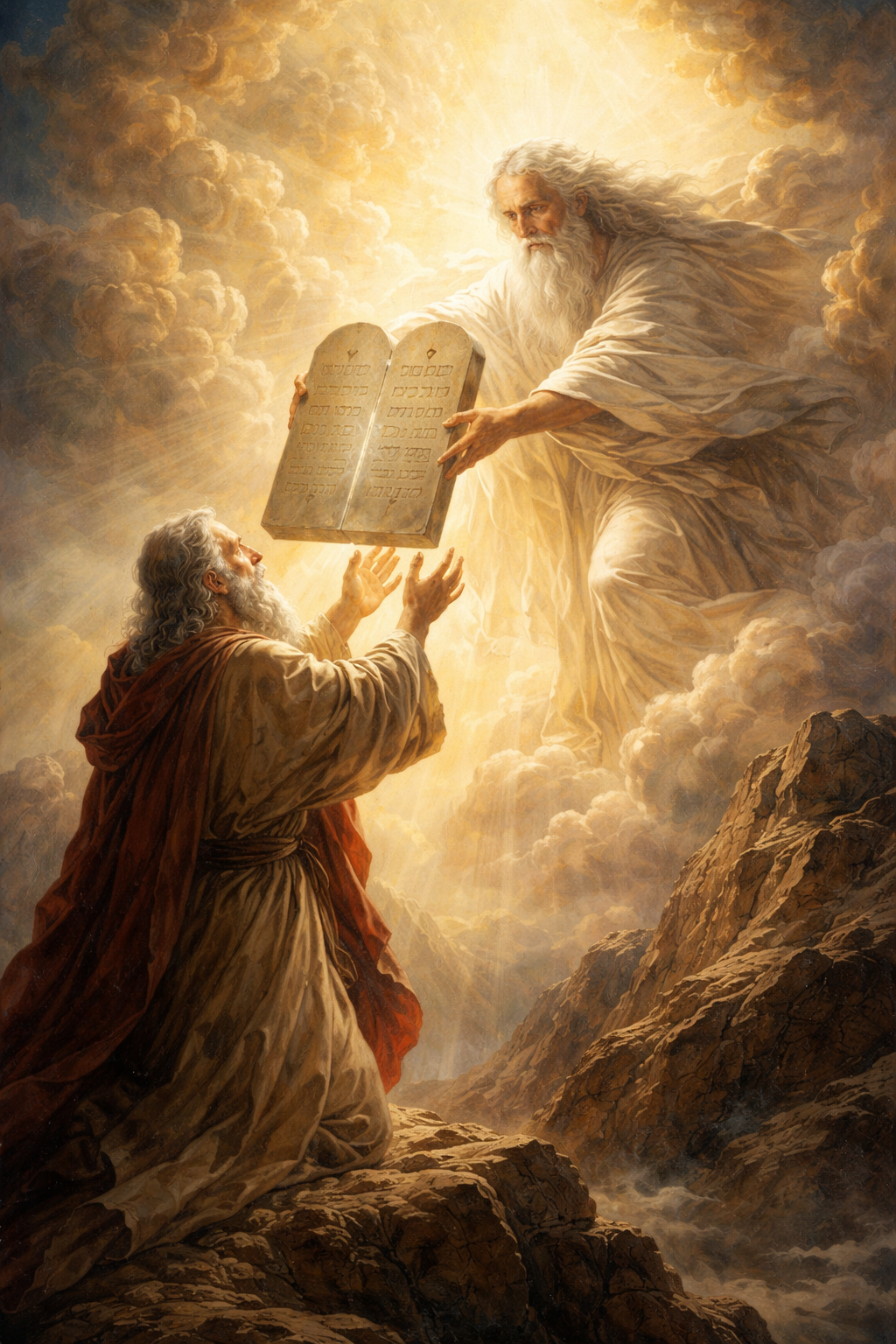
One of the quietest customs in Judaism may also be one of the most revealing. The personal name of God that appears thousands of times in the Hebrew scriptures is almost never spoken aloud. Instead, people substitute words such as Adonai or HaShem.
The common explanation is reverence.
But a deeper question deserves to be asked.
Is the name avoided purely out of reverence, or does the tradition inadvertently shield something far more uncomfortable from scrutiny?
Because when someone begins to examine how that name actually appears in the Torah, it opens the door to one of the most significant historical discoveries about the text itself.
The divine voice in the Torah does not behave like the voice of a single author.
In some sections of the Torah God is consistently called Yahweh. In other sections God is consistently called Elohim. These patterns are not random. Entire narrative blocks use one name while other blocks use another. And when the name changes, other things change with it. The writing style shifts. The vocabulary shifts. The tone and emphasis of the narrative shift as well.
For historians and linguists, this is one of the clearest indicators that a document has multiple sources.
If a single divine mind had dictated the Torah to Moses, there would be no reason for entire sections of the same text to operate under different narrative identities for God.
Once scholars noticed this pattern, they began examining the rest of the text with the same level of scrutiny. The results were striking.
Genesis contains two creation narratives that describe the beginning of the world in different sequences. The flood story appears to combine overlapping traditions that do not align perfectly. Patriarchal stories repeat with altered details. Laws appear more than once with different wording or emphasis.
These features are exactly what historians expect to see when multiple traditions written at different times are later merged into a single narrative.
For this reason many modern scholars conclude that the Torah was not produced in a single moment by a single author such as Moses. Instead it appears to have developed gradually across centuries through the work of multiple writers and editors who preserved and combined earlier traditions.
That conclusion immediately raises a difficult tension.
The Torah itself claims that the law was directly revealed by God to Moses. But if the text was assembled later from different sources, the story describing that moment of revelation cannot be historically literal.
Some defenders respond by suggesting that the text may still represent divine inspiration expressed through human authors.
But the Torah does not present itself that way. It does not claim to be a series of human reflections about God. It claims that the commandments and laws were delivered directly by God through Moses.
Both explanations cannot stand at the same time.
Looking at the text historically also reveals another clear pattern. The narrative consistently centers one particular people. The Israelites are portrayed as uniquely chosen and uniquely bound to a divine covenant. Their genealogies dominate the narrative. Their laws structure the society described in the text. Their conflicts with neighboring groups fill the story.
From a historical perspective this pattern is not unusual. Many ancient civilizations produced foundational texts that reinforced their identity, legitimized their laws, and unified their society.
In the ancient world religion and government were deeply intertwined. Sacred law functioned as civil law. Priestly authority overlapped with political authority. A legal system framed as the will of God carried enormous power.
Some passages in the Hebrew scriptures also describe wars, territorial conquest, and divine commands related to conflict with other nations. Whether these passages represent literal divine instruction or the worldview of the society that produced them is a question that modern readers increasingly confront.
The implications of this historical analysis extend far beyond Judaism itself.
Christianity builds its theological structure on the Hebrew scriptures. The covenants, promises, and prophecies contained in those texts are interpreted as pointing forward to Jesus.
Islam also acknowledges earlier revelations given to figures such as Moses and Jesus before the Quran. The Torah is considered one of those earlier divine messages.
In other words, the Torah functions as the starting layer of authority for the entire Abrahamic religious tradition.
If the Torah is instead understood as a historical document compiled by multiple human authors shaping the identity and laws of an ancient society, then the idea of a single uninterrupted chain of divine revelation becomes far more complicated.
The question then shifts from theology to history.
Are these texts records of direct divine instruction, or are they sacred narratives that emerged from the political, cultural, and religious struggles of ancient communities trying to define who they were.
For billions of people these scriptures still carry profound meaning and moral guidance. But the growing body of textual and historical research surrounding the Torah forces a conversation that cannot easily be avoided.
The earliest foundation of the Abrahamic religious tradition may reflect not a single moment of divine dictation but the complex human process through which societies construct sacred stories about law, identity, and destiny.
And the first clue that opened that door was hiding in plain sight within the text itself.
The changing names of God reveal that the voice speaking in the Torah may never have been just one voice at all.